
If your dishwasher is not draining, first check that it has power and the control panel responds. Then try the Cancel or Stop function to see whether the machine attempts a forced drain, and listen closely to the sound it makes. If water stays in the tub after those basic checks, the cause is usually a blockage, a drain pump problem, damaged wiring, or a control issue that needs testing.
I see this complaint regularly on service calls in Wesley Chapel and Tampa. From the kitchen floor, different brands can look similar. In practice, panel response, what happens when you cancel the cycle, and the exact drain sound usually tell you where to start.
Why is my dishwasher not draining?
A dishwasher usually does not drain for three broad reasons: the water path is blocked, the drain pump is not moving water, or the machine is not sending the right power or signal to the pump. More than one of those can be true at the same time, so a no-drain complaint should never be reduced to one universal cause.
A small amount of water in the sump can be normal on some models. What is not normal is standing water across the bottom, cloudy water over the filter, or dirty water that leaves and then returns later.
| Symptom | Likely cause | What to do |
|---|---|---|
| Panel responds, but water stays in the tub at the end of the cycle | Blocked filter area, clogged drain line, weak pump, or control issue | Clean the easy-access filter area first, then check the sink-side drain connection if safely accessible |
| No drain sound at all when drain should start | Control fault, wiring issue, latch issue, or pump not being energized | Stop there and have the unit safely de-energized and electrically tested |
| Drain cycle starts, but the sound is quiet, weak, or only hums | Drain pump jammed, failing, or not getting enough power | Do not keep restarting cycles; the pump circuit and drain path need testing |
| Drain cycle starts and you hear rattling or grinding | Hard debris in the pump area or damaged pump impeller blades | Turn power off before putting hands inside, then inspect only the easy-access filter zone |
| Dishwasher drains slowly, then stops | Partial restriction in the hose or sink plumbing | Inspect the hose routing and sink drainage if you can do it safely |
| Machine drains, then dirty water returns later | Backflow from the sink drain, disposal connection, air-gap issue, or low hose loop | Check sink drainage and hose routing under the sink |
| Filter looks clean, but tub still stays full | Hidden internal blockage, internal sensing or control problems, pump failure, or wiring trouble | Professional disassembly and meter testing are the next step |
| Drain issue started intermittently before becoming constant | Door wiring damage or unstable control output | Have the wiring harness and control board checked |
What should I check first if my dishwasher is not draining?
Start with power and panel response. If the panel is dead, the diagnosis changes completely. If the panel is alive, the next useful step is to try the machine’s Cancel or Stop function and listen to what the dishwasher does.
- Confirm power is present. Make sure the dishwasher actually powers on and responds to buttons.
- Try Cancel or Stop. On many dishwashers, canceling the cycle starts a forced drain or ends the cycle through a drain step. Hold the button only if your panel instructions indicate that function.
- Listen with the door fully latched. Is the machine completely silent, quietly humming, or making a rattling or cracking sound inside? That sound matters.
- Check the filter area. Clear food debris, labels, glass, shell fragments, seeds, or other hard particles from the easy-access area.
- Inspect the drain line under the sink. If it is safely accessible, look for a kink, crushed section, or obvious blockage at the sink-side connection.
- Run the sink. If the sink drains slowly too, the dishwasher may be trying to drain into a restricted plumbing path.
If the dishwasher stays completely silent during a drain attempt, that points more toward a control, wiring, latch, or power-delivery problem. If it hums quietly but water does not move, the pump may be jammed, weak, or underpowered. If it rattles or makes a rough internal noise, I start thinking about a broken impeller blade or hard debris caught in the drain pump.
If those checks do not solve it, the problem usually moves beyond kitchen-side troubleshooting and into component diagnosis. That is the point where a proper dishwasher not draining repair visit or general dishwasher repair service makes more sense than guessing.
How can I tell if it is a clog or a bad drain pump?
The drain sound and drain pattern usually give the first clue, but they do not give a final answer. A restriction is more likely to cause slow draining, partial draining, or water that leaves and then comes back. A pump problem is more likely when the machine enters the drain portion of the cycle, you hear a weak hum or buzz, and very little water moves.
If something hard gets into the pump, the sound can change again. I have seen drain pumps with damaged blades, and I have seen pumps blocked by solid debris. From the outside, both can sound bad, but you cannot reliably tell whether it is only a clog or a damaged pump without opening things up and testing.
That is why I do not recommend replacing parts by guesswork. A no-drain dishwasher can have overlapping faults: a clogged hose, a weak drain pump, low or missing power to the pump, or wiring damage in the door.
What can I safely do if water is still sitting in the dishwasher?
If water is still in the tub, disconnect power before doing anything else. If the unit plugs into an outlet under the sink, unplug it there. Then remove the dishes, pull out the rack, clear debris from the filter area, and remove as much standing water as you can.
Look for obvious solids. I regularly find labels, glass, shell fragments, seeds, and other debris stuck in the filter zone or near the sump opening.
If the machine is hardwired instead of plugged into an outlet, stop there. A hardwired dishwasher around standing water is not a casual DIY situation. Safe disconnect and reconnection in that setup is work for a technician or electrician.
If you clear the easy-access area and still do not find the cause, do not assume there is no restriction. The blockage may be deeper in the drain path, or the problem may be electrical instead of mechanical.
Why would a dishwasher not drain if the filter looks clean?
A clean filter does not rule out a real drain problem. I see machines with clean filters that still have a blocked drain line, a weak drain pump, damaged door wiring, internal sensing or control problems, or a drain circuit that is not being powered correctly.
If the simple checks do not solve it, the next step is often to pull the dishwasher out of the cabinet, fully de-energize it, and test components one by one. At that stage, the job has moved beyond safe kitchen-side troubleshooting.
Can wiring damage in the door really cause a dishwasher not to drain?
Yes, it can. Broken or damaged wires in the door harness are a real cause of drain complaints because damage there can keep the pump from getting the right command or the right power.
This gets missed because most people focus on the water at the bottom, but the actual failure can be in the signal path that tells the dishwasher to drain. In those cases, cleaning the filter area changes nothing because the drain step is not being completed correctly in the first place.
Door-harness diagnosis is not beginner work. It usually means removing panels, tracing wires, and using a multimeter safely around a wet appliance.
Does the installation style change the diagnosis?
Yes, installation style can absolutely change the diagnosis because the dishwasher may be fine while the sink-side drain path is restricted or allowing backflow. A disposer-connected setup, a branch-tailpiece setup, and an air-gap setup can all change how a drain complaint presents.
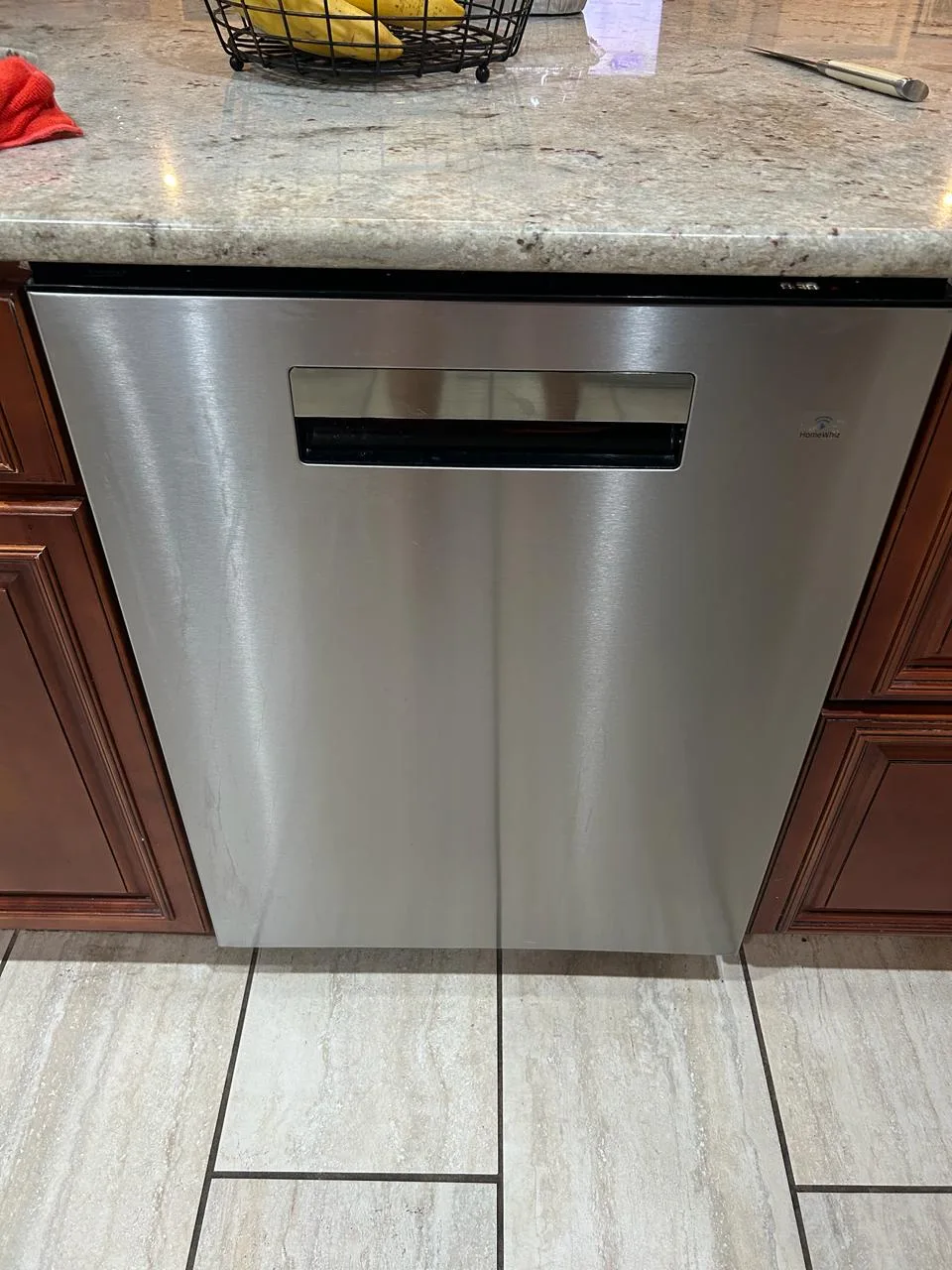
Under the sink, check for a kinked hose, a crushed section, or a passage that is fully blocked. A dropped high loop can also let dirty water return into the dishwasher later. If the machine drains through a garbage disposal, restrictions near that inlet can stop flow or cause backwash into the tub.
Inside the dishwasher, designs vary too. Some models make the filter and sump area easy to inspect. Others hide more of the drain path, which means a machine can look clean from above and still have a restriction deeper in the system.
If your dishwasher is also leaking or leaving water where it should not, the diagnosis can overlap with a broader dishwasher leak repair issue rather than a simple clog alone.
When does dishwasher drain troubleshooting stop being DIY?
It stops being reasonable DIY when the easy checks are done and the next step requires electrical testing, pulling out a built-in unit, or working around standing water and live circuits. That is especially true with hardwired dishwashers.
There are real risks here. Built-in dishwashers have sharp sheet-metal edges, awkward mounting points, and wet working conditions around electrical components. If the unit is hardwired, an incorrect disconnect or reconnect can create a bigger problem than the original no-drain complaint.
If you are already at that stage, you can book service at /contact-appliance-repair/ before the problem turns into repeated failed cycles or water damage.
How much does dishwasher drain repair usually cost?
The cost depends on what the diagnosis actually shows. On a dishwasher that is not draining, the fix might be simple cleaning and service, hose work, a pump replacement, a wiring repair, or a more involved repair with multiple failed parts. Final price is quoted after diagnosis, and the $69 diagnostic is credited toward the repair.
| Repair tier | Typical dishwasher drain-related work | Price range |
|---|---|---|
| Tier 1 | Very simple service, minor cleaning or not expensive part | $100-250 |
| Tier 2 | one of major components replacement or multi-step repair | $290-380 |
| Tier 3 | Complex cases involving several assemblies at once | $350 and more |
I did not expand this into four or five public price groups because the published pricing for SOS Appliance Repair is limited to these approved ranges. For the customer, the practical point is simpler: the final price is agreed before any work starts, not after.
What happened on a real dishwasher not draining call in Land O’ Lakes?
On a service call in Land O’ Lakes, the customer called because the dishwasher was not draining. The customer thought it was probably a simple clog. On site, the diagnosis showed the machine needed both a drain hose replacement and a drain pump replacement.
That matters because from the complaint alone, or even by listening, you could have guessed wrong. The actual fault involved the hose and the pump together.
The price was approved before any work started. The repair was completed on site during the same visit, the customer paid on site, and documentation was provided at the end of the job.
After the repair, draining was restored that same day. The customer received the manufacturer warranty on the parts, which is typically 1 to 12 months depending on the part and was 12 months on that drain-pump-type component, plus a 3-month labor warranty, which is the same as 90 days.
When should you call a technician instead of trying more DIY?
Call for service if the panel responds but the machine still will not drain, if Cancel or Stop produces no drain response, if the drain sound is weak or rough, if the tub stays full after you clear the easy-access filter area, or if the unit is hardwired and cannot be safely unplugged under the sink.
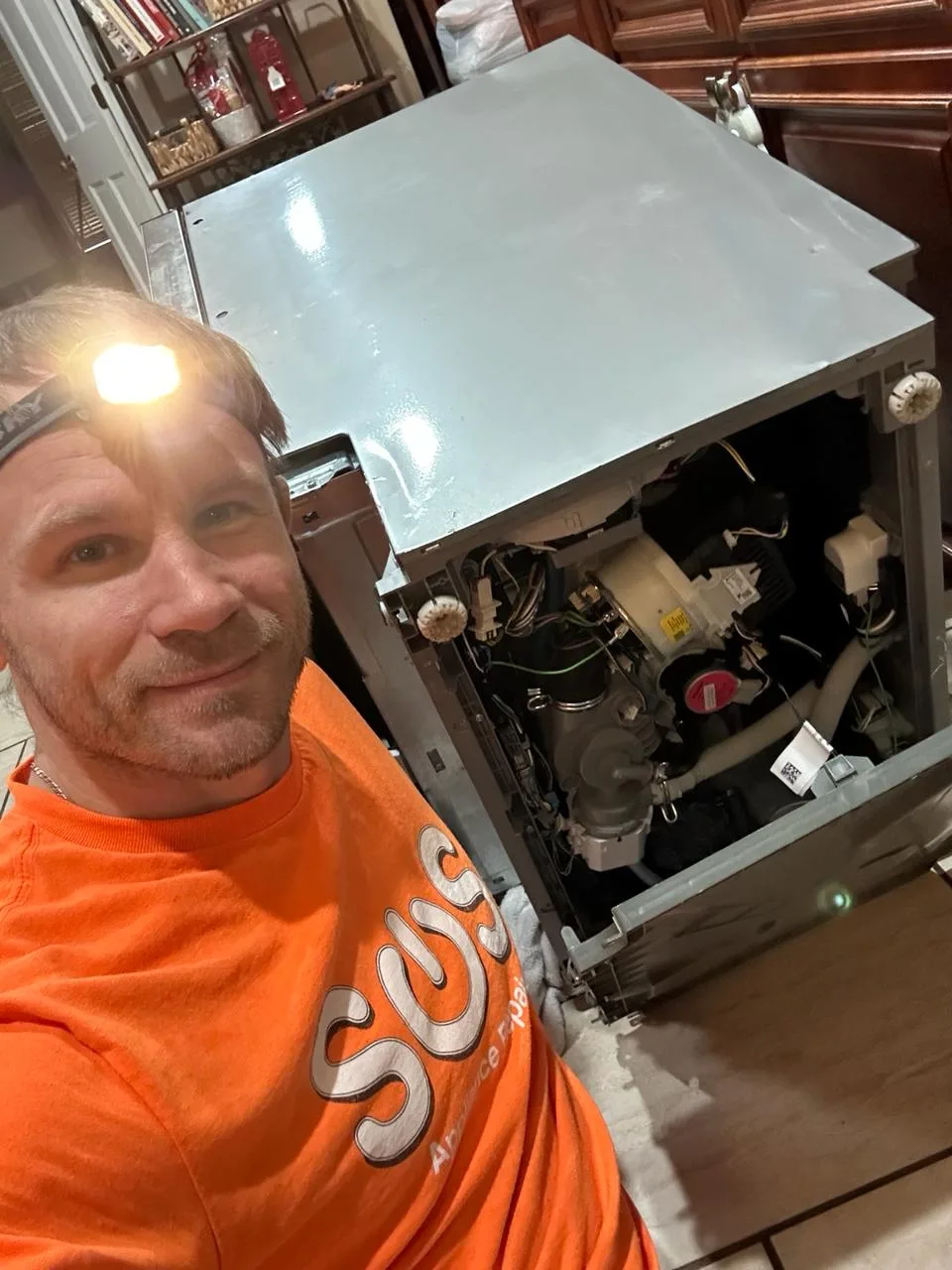
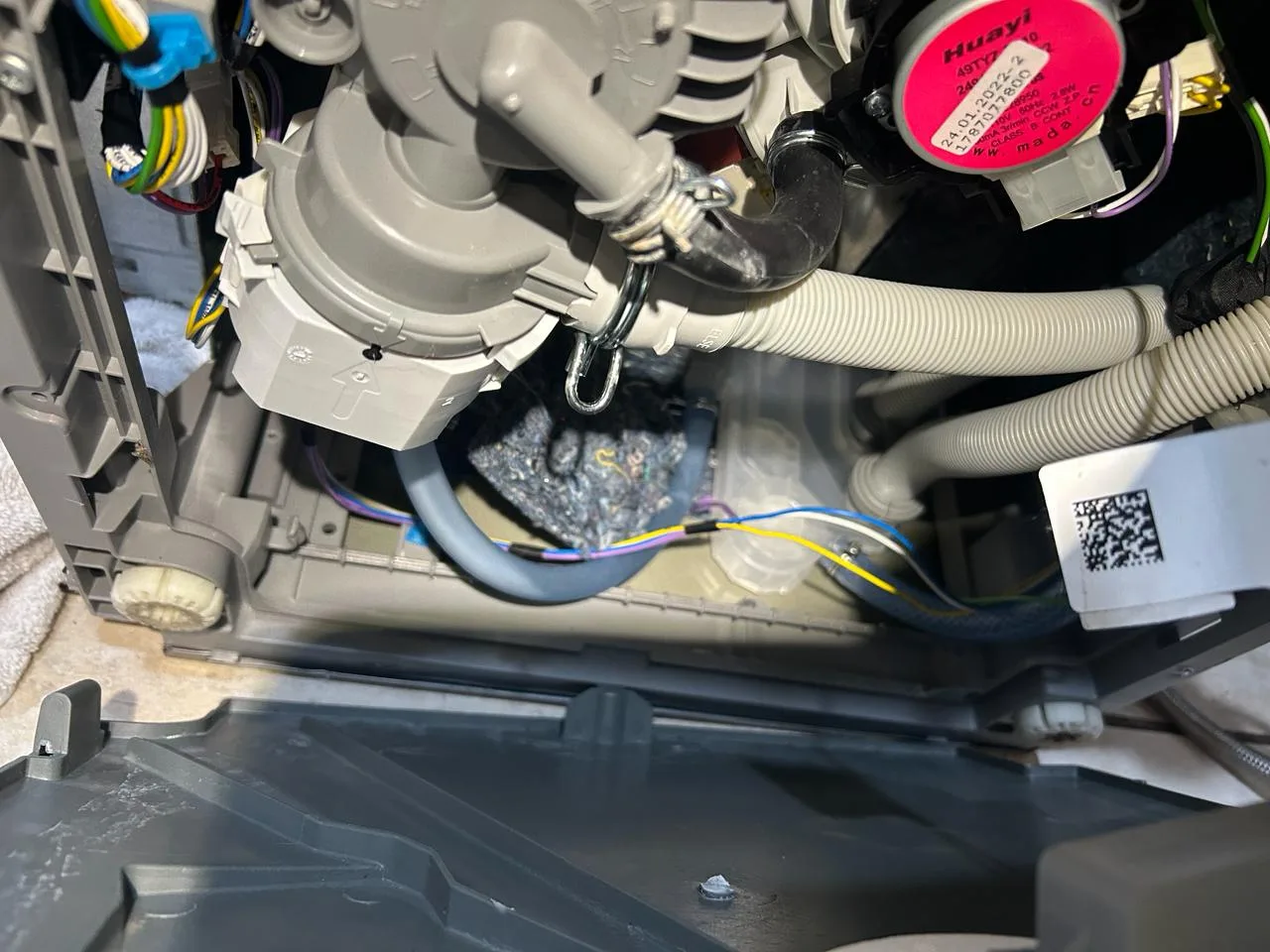
If the next step involves pulling the dishwasher out, testing wiring, or checking whether the pump is receiving enough power, the safe DIY line has been crossed. Even as a technician, I will tell you honestly that not every drain complaint is solved by the first guess or by one obvious bad part. That is exactly why proper diagnosis matters.
If you need help, book online at /contact-appliance-repair/ or call (786) 650-0707. SOS Appliance Repair serves Wesley Chapel, Tampa, Land O’ Lakes, Lutz, Zephyrhills, Dade City, San Antonio, Odessa, Cheval, Trinity, Keystone, East Lake, Citrus Park, Westchase, Oldsmar, Brandon, Seffner, Dover, Valrico, Plant City, and Homosassa. The $69 diagnostic is credited toward the repair, labor is covered for 90 days, and sourcing is part of the job when a drain problem turns out to involve a harder-to-find part or more than one failed component. I’m Anton K., an insured appliance repair professional with over 8 years of hands-on experience, a technical degree, and EPA Section 608 certification, with factory diagnostic access for GE, GE Profile, Cafe and Monogram appliances.
Frequently Asked Questions
Can a dishwasher have both a blockage and an electrical problem at the same time?
Yes. A machine can have debris in the drain path and also have a weak pump circuit or damaged wiring, which is why a partial drain does not always mean the whole problem is solved.
Will replacing the drain pump fix most no-drain dishwashers?
No. A bad pump is one real cause, but not the only one. Some machines have a sink-side blockage, hose problem, wiring fault, or control issue instead.
Can I use chemical drain cleaner in a dishwasher drain line?
I do not recommend it. Chemical cleaners can damage dishwasher parts, create fumes inside the appliance, and make later service more hazardous.
Does brand matter with dishwasher drain problems?
Yes, mainly in access and design. The symptom may look similar on GE, Whirlpool, LG, Bosch, or Samsung, but how the machine comes apart and where restrictions form can differ.
Can a slow kitchen sink make a dishwasher look like it has failed?
Yes. If the sink-side plumbing is restricted, the dishwasher may drain poorly, back up later, or leave dirty water in the tub even though the dishwasher itself is not the only problem.


