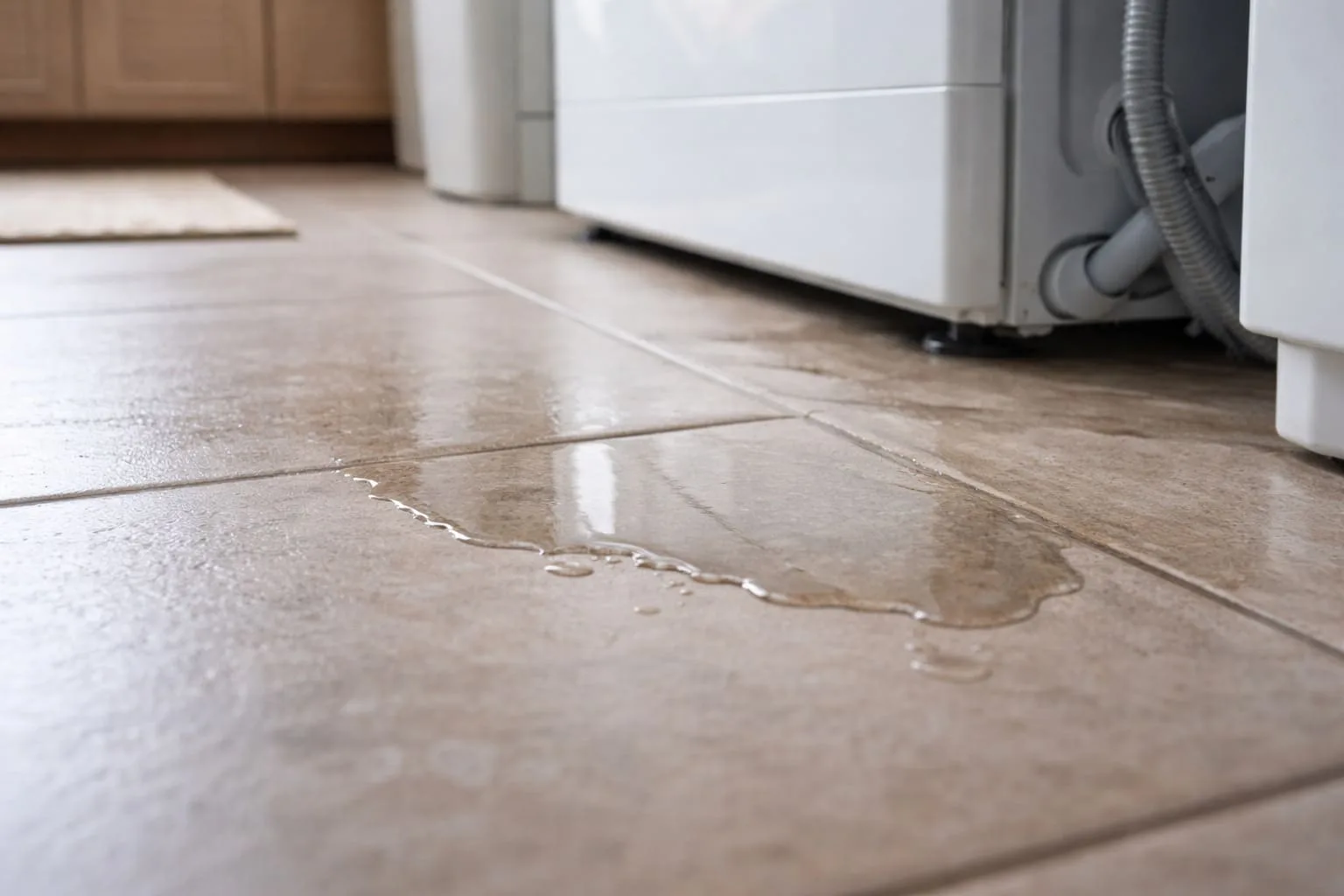
A small leak inside a household appliance doesn’t announce itself. There’s no alarm, no error code flashing on a screen. Most of the time, the first sign is a damp spot on the floor, a faint smell, or a water stain that you notice weeks after it first appeared. By then, the leak has usually been doing quiet damage for a while.
Different appliances leak in different ways, and knowing where to look — even if you’re not going to fix it yourself — can help you catch a problem before it turns into a costly one.
Washing Machines: The Hose Connections Are the Weak Point
Most washing machine leaks don’t come from the drum or the pump. They come from the hoses — the rubber tubes that carry water in and out of the machine. Over time, these hoses can crack, harden, or loosen at the fittings where they connect. The leak often starts as a slow drip that only shows up during or right after a wash cycle.
The supply hoses at the back of the machine are especially vulnerable. If your washer has been in place for more than five years and nobody has inspected those connections, it’s worth taking a look. You don’t need to disconnect anything — just check for any visible moisture, staining, or bulging around the fittings.
Dishwashers: Inside the Door Is Where It Starts
Dishwasher leaks are tricky because the machine is sealed on the outside. Water that escapes usually comes from the door seal — the rubber gasket that runs around the inside edge of the door. When this seal wears down, warps, or gets coated with detergent residue, it stops holding water back the way it should.
A dishwasher door seal leak often shows up as a puddle on the kitchen floor right after a cycle ends. Sometimes it’s only a small amount — enough to leave the floor slightly damp but not enough to notice right away. If you’re regularly wiping up moisture near the base of your dishwasher, that seal is probably the first thing worth checking.
Refrigerators: The Drip Line Nobody Thinks About
Refrigerators have a defrost drain — a small tube that carries condensation water away from the inside of the freezer down to a drain pan underneath the unit. This line can get clogged with ice or debris over time. When it does, water backs up and starts pooling inside the freezer or dripping out somewhere it shouldn’t.
This type of leak is easy to miss because it happens inside the appliance. The first signs are usually a buildup of ice in an unexpected place, or water appearing on the floor behind or beside the refrigerator without any obvious source.
Dryers: It’s Not Always Steam
Gas and electric dryers don’t use water the same way a washer does, but they still produce moisture — and that moisture has to go somewhere. In a dryer with a condensation leak, water collects inside the unit or drips out through a vent connection that isn’t sealed properly. This is more common in older units or in situations where the exhaust hose has been disconnected and reconnected without proper attention to the fittings.
What to Do When You Spot Something
A leak doesn’t always mean a major repair. Some causes — like a worn door seal or a loose hose fitting — are relatively straightforward to address. Others, like internal drain blockages or cracked components, are better left to a professional.
- Check around hose connections and fittings for any signs of moisture or discoloration.
- Run a cycle and watch the floor near the appliance afterward — a slow leak may only show up at specific points during operation.
- If you find moisture but can’t identify where it’s coming from, don’t ignore it. Water that sits near electrical components or under flooring can cause damage that compounds over time.
If a leak has been going on for a while, there may already be damage underneath or behind the appliance that isn’t visible from the outside. A technician can assess the situation and let you know what you’re actually dealing with.